
Sport Touring Motorcycle Review
2026 BMW R 1300 RT Review: Sharper, Faster, Still an RT?
For more than four decades, the BMW RT has been one of the quiet benchmarks of sport touring. It has never been the loudest, lightest, or most aggressive motorcycle in the class. Instead, it built its reputation on covering serious distance quickly, calmly, and with very little compromise.
The 2026 BMW R 1300 RT changes that formula more than any RT in recent memory. With a new 1,300cc boxer engine, a redesigned chassis, EVO Telelever front suspension, and available Automated Shift Assistant, BMW has made the RT sharper, stronger, and more technically ambitious.
But that creates the real question: has BMW improved the RT as a sport tourer, or has it pushed the bike too far away from the calm long-distance character that made the name so respected?
In this 2026 BMW R 1300 RT review, we look at the engine, chassis, comfort, technology, touring practicality, and the key differences between the new R 1300 RT and the outgoing R 1250 RT based on official launch data and editorial analysis.
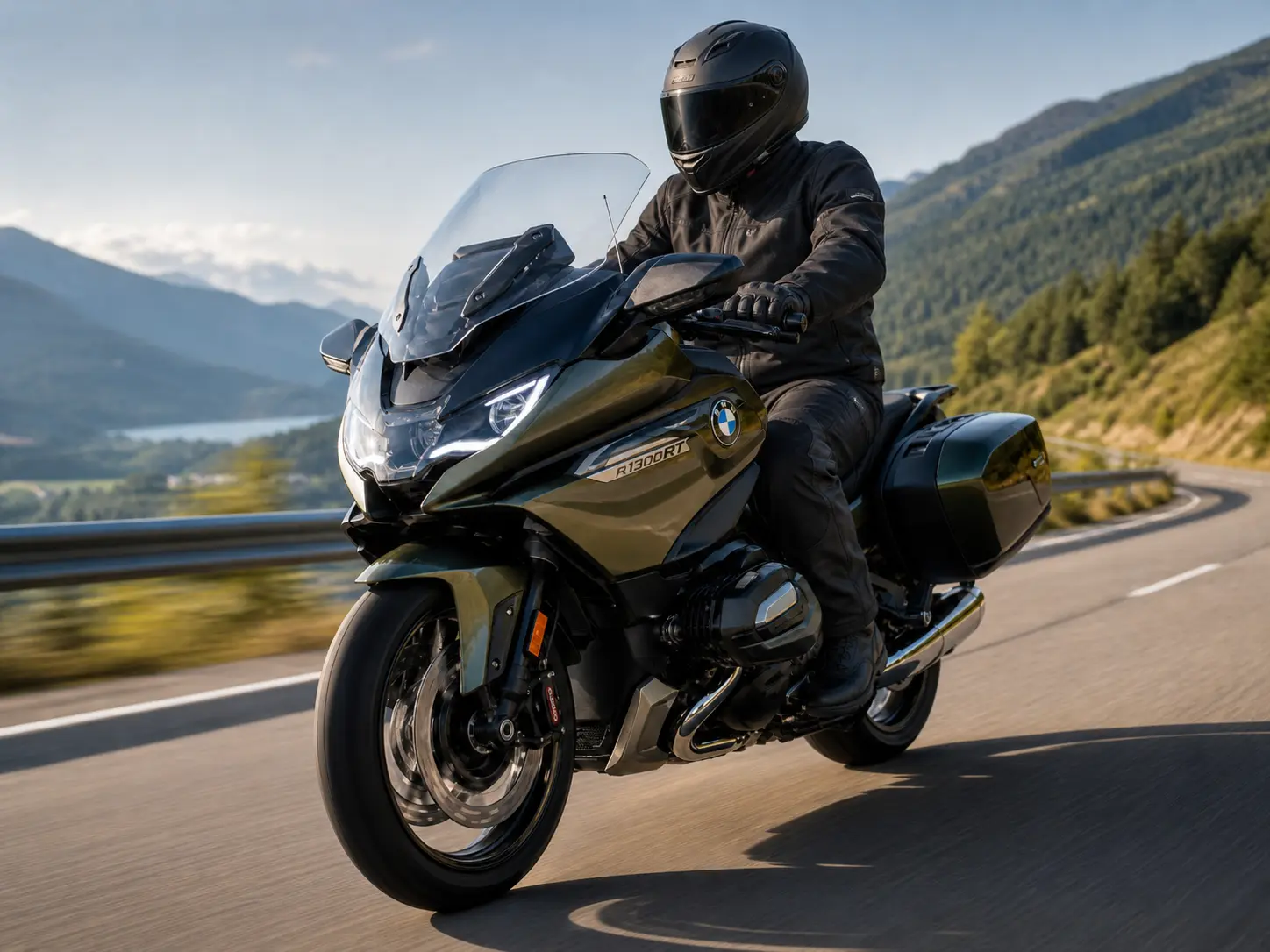
Technical Overview: A Complete Redesign
On paper, the numbers reflect a significant engineering leap. At the heart of the new RT sits BMW’s redesigned 1,300cc liquid-cooled boxer twin. BMW claims 145 hp at 7,750 rpm and 110 lb-ft of torque at 6,500 rpm, making it the most powerful boxer engine used in an RT to date.
The chassis is just as important as the engine. BMW has moved away from the previous architecture and now uses a sheet metal steel main frame with an aluminium tube lattice rear frame. The aim is greater stiffness, better packaging, and improved mass centralization.
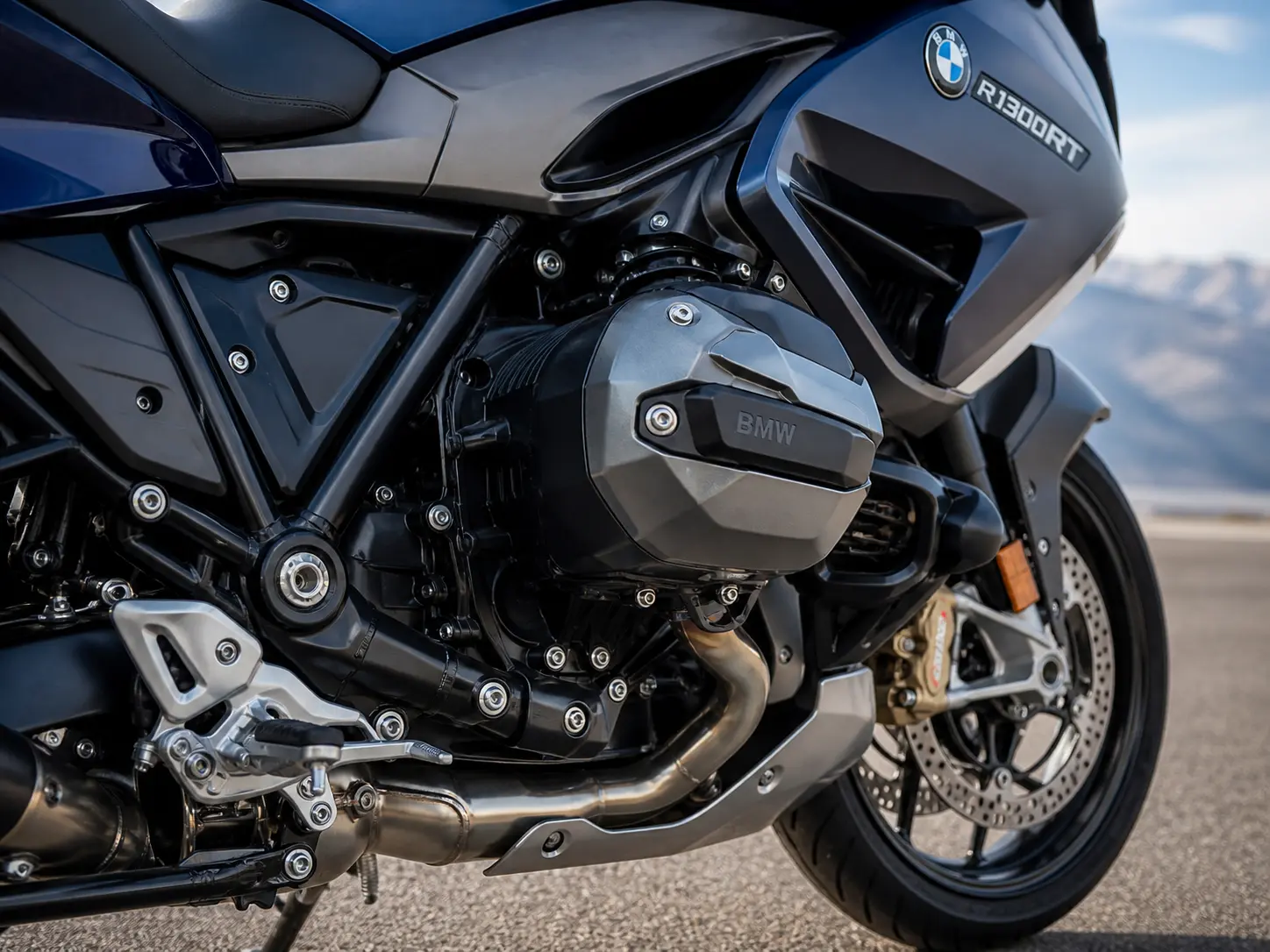
Up front, the new EVO Telelever separates steering and suspension forces, while the EVO Paralever handles the rear. With BMW’s electronic suspension systems, including Dynamic ESA and market-dependent chassis options, the RT becomes a more adaptable machine for changing loads, riding modes, and road conditions.
For sport touring riders, that matters. A motorcycle like the R 1300 RT is not judged only by peak power. It has to remain composed with a passenger, luggage, rain gear, uneven roads, and a full day of motorway miles behind it.
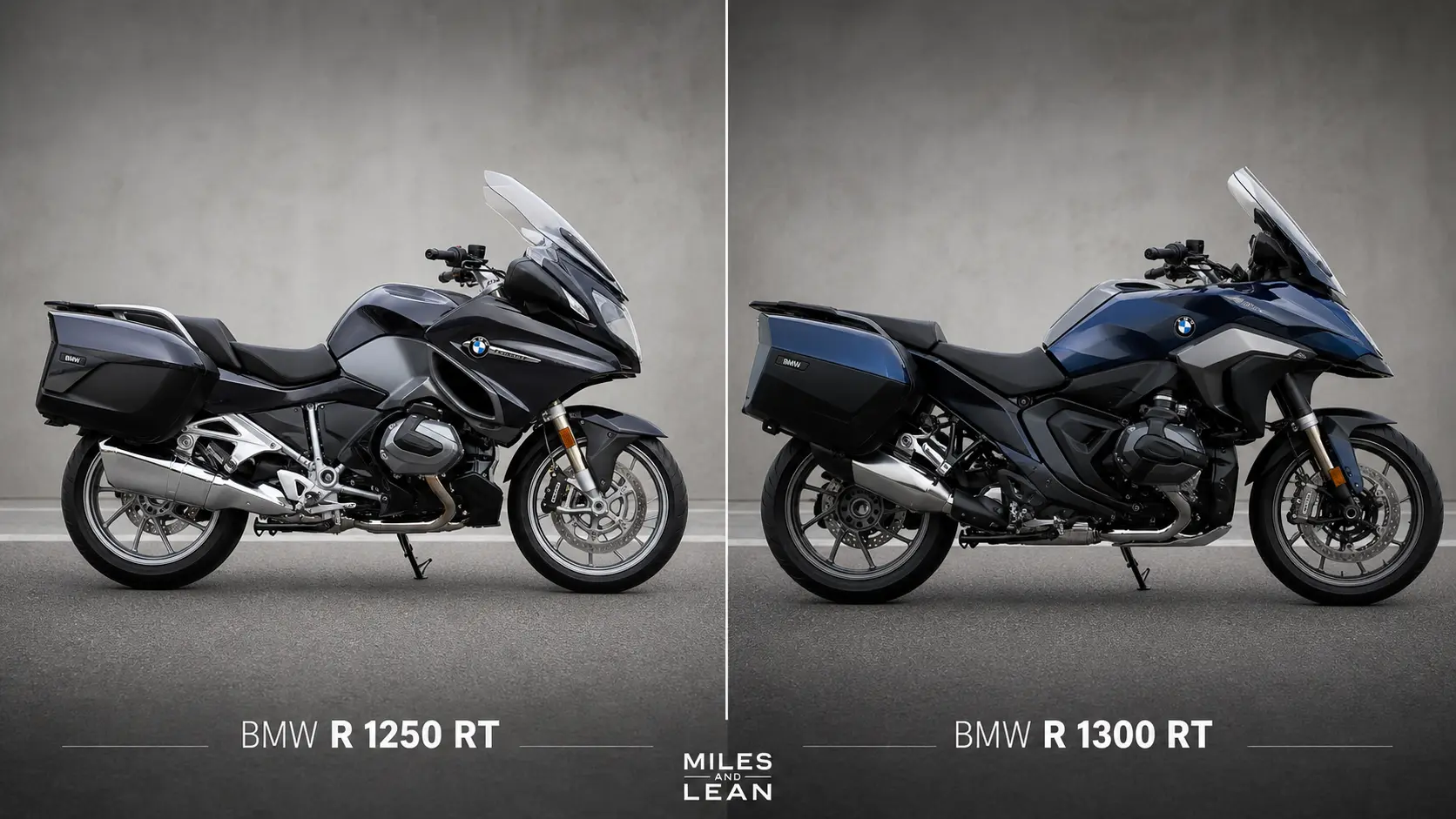
BMW R 1300 RT vs R 1250 RT: What’s Different?
When comparing the BMW R 1300 RT vs R 1250 RT, the first obvious change is the design. The new bike looks more compact, more angular, and more aggressive. The old RT’s broad, imposing front end has been replaced by a sharper fairing and a more modern lighting signature.
The power delivery has also shifted. The R 1250 RT was defined by its relaxed, muscular low-end torque and calm touring personality. The R 1300 RT keeps the boxer character but adds more urgency, especially higher in the rev range. It feels, on paper and by design, like a more athletic RT.
| Feature | 2026 BMW R 1300 RT | BMW R 1250 RT |
|---|---|---|
| Engine displacement | 1,300 cc | 1,254 cc |
| Claimed power | 145 hp | 136 hp |
| Claimed torque | 110 lb-ft | 105 lb-ft |
| Front suspension | EVO Telelever | Telelever |
| Shifting technology | Available ASA | Optional Shift Assist Pro |
| Character | Sharper, more technical | Calmer, more traditional |
2026 BMW R 1300 RT Comfort and Ergonomics
For riders who spend entire days in the saddle, wind protection matters more than peak horsepower. A major concern with the sharper design is whether 2026 BMW R 1300 RT comfort can match the reputation of its predecessor.
BMW has clearly tried to preserve the RT’s long-distance identity. The electronically adjustable windscreen, broad fairing, and touring-focused rider triangle are all central to the bike’s purpose. The new RT may look more compact, but it still needs to deliver the calm cockpit feel that made the model famous.
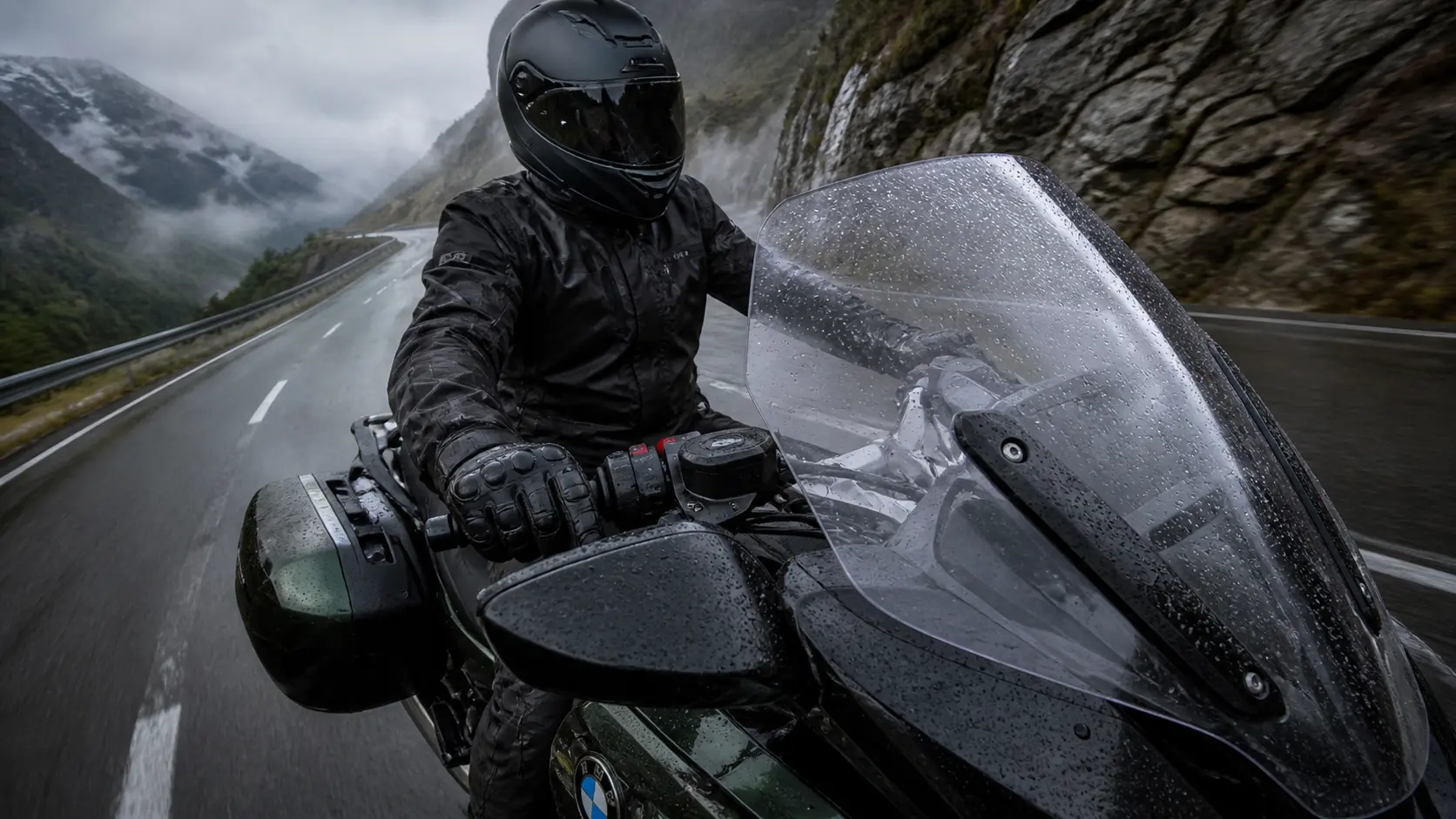
The rider position appears slightly more dynamic than before. That should improve front-end connection without turning the RT into a wrist-heavy sport bike. For long-distance riders, this balance is crucial. Too upright, and the bike can feel detached in fast corners. Too aggressive, and fatigue builds quickly after several hours.
If you want to understand why this matters, our guide to Sport Touring Ergonomics explains how bar position, seat shape, footpeg height, and spine angle affect comfort on long-distance rides.
Handling and Suspension
The EVO Telelever front end is one of the R 1300 RT’s defining technical advantages. Traditional telescopic forks compress noticeably under hard braking. Telelever reduces that dive, helping the chassis stay calmer when slowing for tight corners or carrying extra weight.
That matters on a heavy sport tourer. A motorcycle loaded with panniers, a passenger, and touring gear can become unsettled if the suspension is too soft or the geometry changes too much under braking. The RT’s front-end concept is designed to preserve composure.
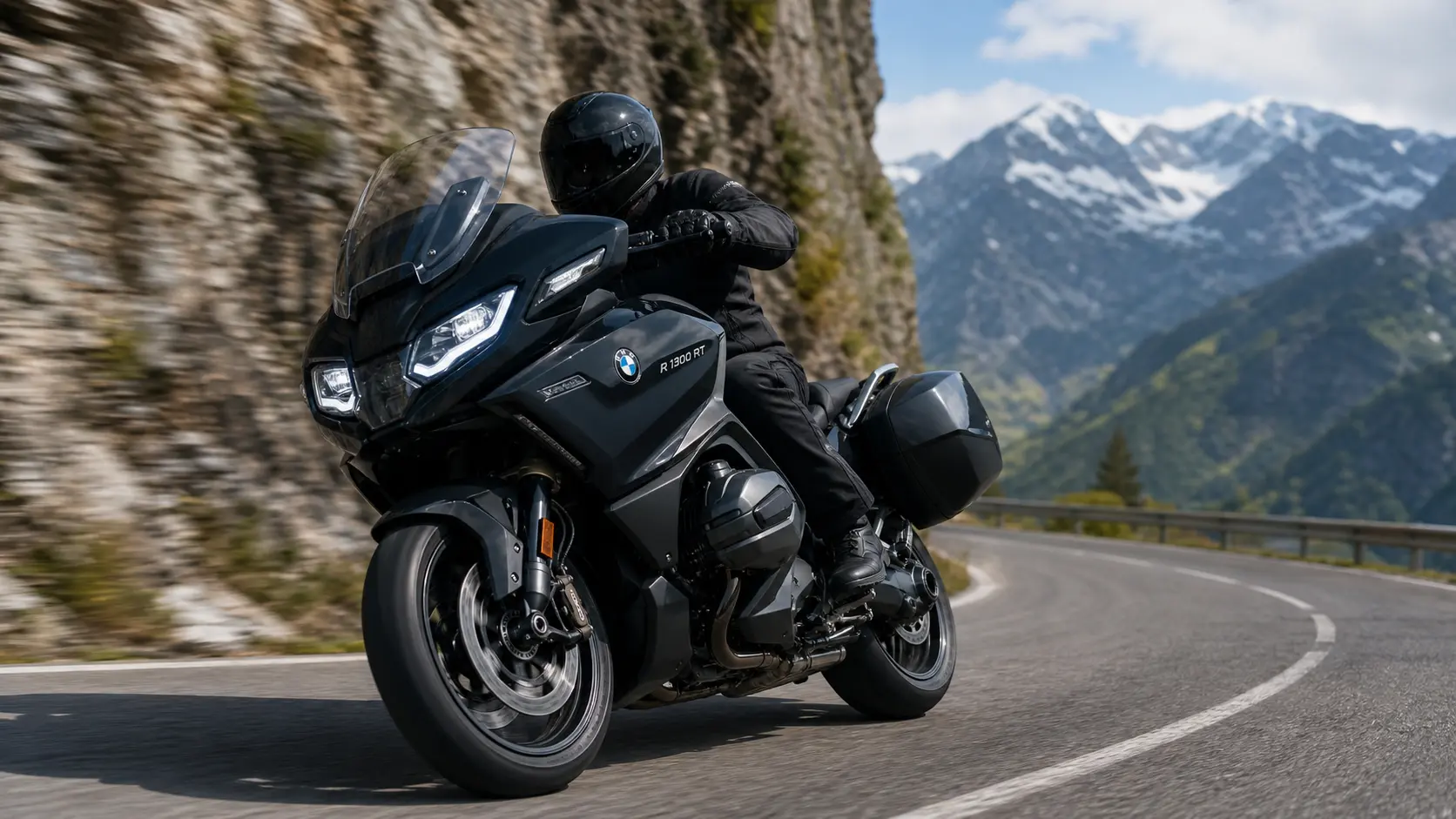
The tradeoff is feel. Telelever systems can reduce some of the direct feedback riders expect from a conventional fork. That does not make the system worse, but it does mean setup matters. Tire pressure, suspension mode, luggage weight, and passenger load all have a noticeable effect on how precise the front end feels.
For riders setting up the bike for two-up touring or heavy loads, tire pressure matters as much as electronic suspension mode. See our Motorcycle Tire Pressure Guide before loading the RT with luggage and a passenger.
Technology and Touring Practicality
You cannot write a comprehensive BMW R 1300 RT touring review without looking at the electronics. The new RT is not a simple motorcycle with a large fairing; it is a premium touring platform built around integrated rider aids.
The available Riding Assistant package brings radar-based features such as Active Cruise Control. For long motorway days, this is one of the most valuable touring technologies on the bike. It reduces the constant micro-adjustments required in traffic and can make high-mileage riding less mentally tiring.
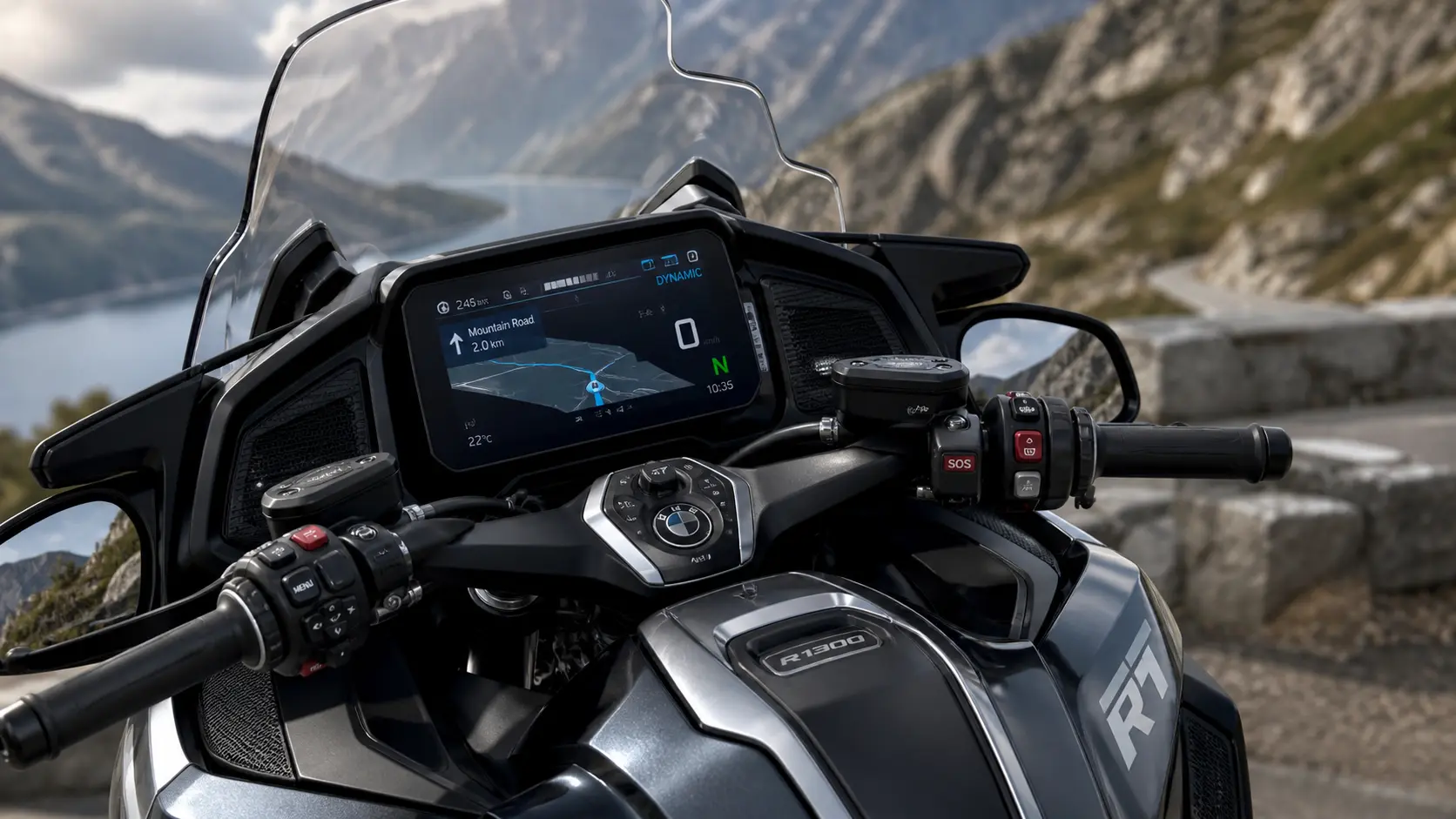
Then there is BMW R 1300 RT ASA. The Automated Shift Assistant offers automated clutch operation with manual or automated shifting. For purists, that may sound unnecessary. For riders who regularly deal with stop-start traffic before reaching open roads, the appeal is obvious.
The key point is that ASA changes the touring experience more than it changes outright performance. It is about reducing workload, especially when the bike is fully loaded or used in mixed riding conditions.
Luggage integration remains one of the RT’s core strengths. The integrated pannier system is central to the bike’s touring role, although exact helmet fit inside the cases should always be checked with your specific pannier and helmet combination.
If you are planning longer trips with a passenger, our Art of Two-Up Riding Guide can help you think through preload, luggage balance, and passenger confidence.
Running Costs and Ownership
The 2026 BMW R 1300 RT sits firmly in the premium touring category, and ownership costs should be viewed accordingly. While the base motorcycle may look competitive, the most desirable equipment, including ASA, radar-assisted systems, advanced lighting, and market-dependent chassis options, is often tied to option packages.
This is not unusual in the BMW touring world, but it should be considered before comparing the RT with simpler rivals. However, the boxer layout still gives the RT one major practical advantage: shaft drive. For long-distance riders, especially those who tour in bad weather or cover multiple countries in a week, avoiding chain cleaning and lubrication is a massive benefit.
As with any heavily equipped modern touring motorcycle, long-term ownership will depend on dealer support, software reliability, service access, and the cost of electronic components outside warranty. Riders planning to keep the bike for many years should consider warranty coverage as part of the purchase decision.
Who Is the 2026 BMW R 1300 RT For?
The 2026 BMW R 1300 RT is aimed at riders who want serious long-distance capability without giving up precision, speed, and modern rider aids. It makes the most sense for riders who regularly cover motorway miles, ride two-up, carry luggage, and still want a motorcycle that feels composed on fast mountain roads.
It is less ideal for riders who want simplicity, low purchase cost, or a light, minimal touring bike. The RT is still a premium, technology-heavy motorcycle. Its best features come when the bike is specified with the right options, and that means the financial commitment can become significant.
For the rider who wants one motorcycle to handle commuting, cross-border touring, wet-weather motorway work, and fast Alpine roads, the R 1300 RT remains one of the most complete answers in the sport touring class.
Pros and Cons
Pros
- Strong boxer performance: 145 hp and 110 lb-ft of torque give the new RT more urgency than before.
- EVO Telelever stability: The front-end concept helps preserve composure under braking and heavy load.
- Available radar-assisted touring tech: Active Cruise Control can significantly reduce fatigue on long motorway rides.
- Shaft drive: A major advantage for riders who cover serious distance in all weather conditions.
Cons
- Expensive options: The most desirable features can push the final price significantly higher.
- ASA learning curve: Automated shifting may require a period of adjustment for riders used to a conventional clutch.
- Dashboard complexity: The RT offers a massive range of features, but mastering the sub-menus takes time.
Verdict: Still the Ultimate Sport Tourer?
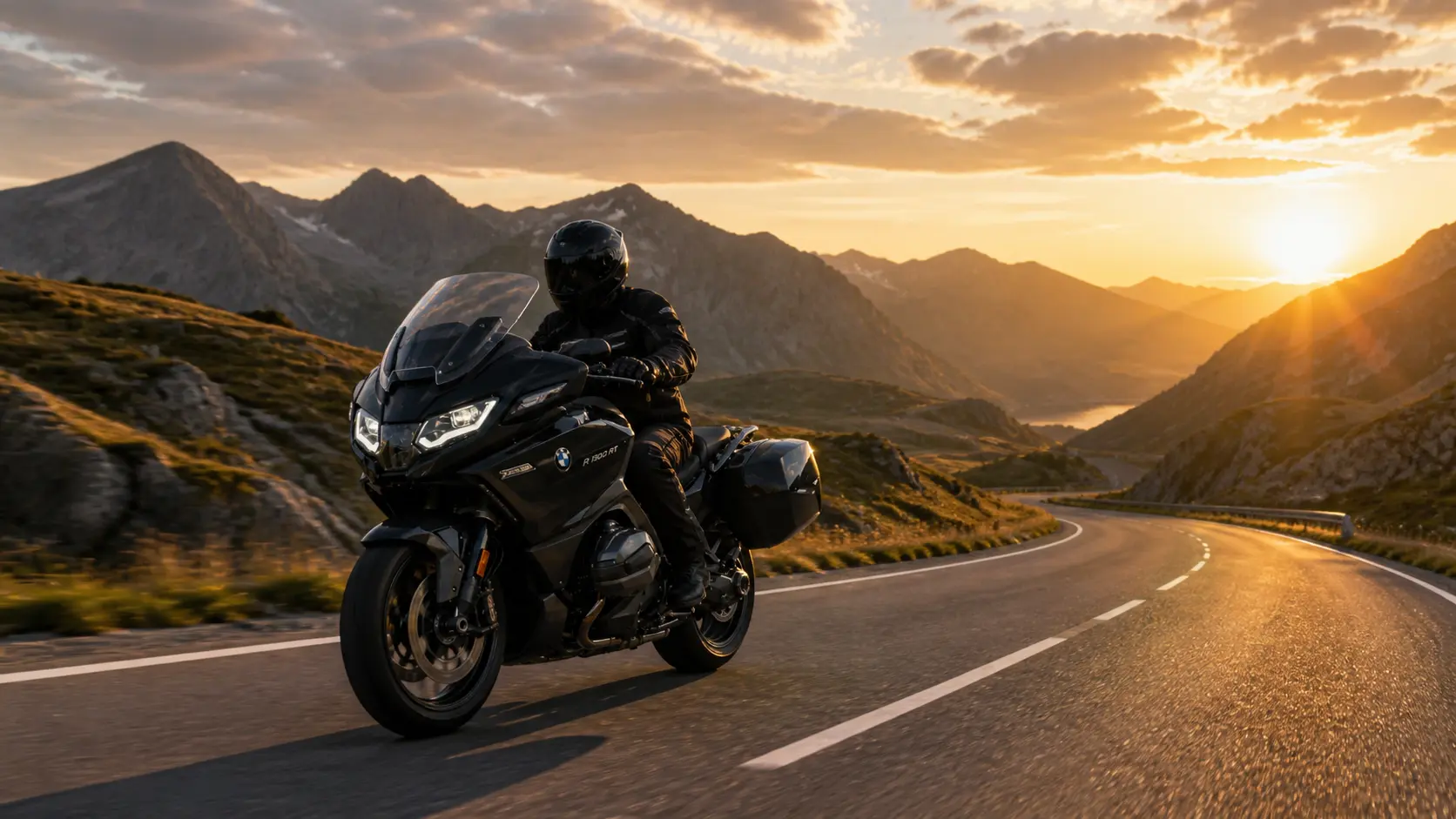
The transition from the R 1250 RT to the R 1300 RT represents a major shift in the model’s history. BMW has taken a calculated risk by adding more agility, more power, and more technology to one of the most established touring motorcycles in the world.
Has it worked? On paper, yes.
The 2026 BMW R 1300 RT is faster, sharper, and more technically advanced than its predecessor. More importantly, it still appears to understand what an RT must be: a motorcycle for covering serious distance quickly, comfortably, and with confidence.
It is not simply a fast bike with panniers; it is a purpose-built long-distance machine with a stronger sporting edge than before.
If you are comparing premium models for the upcoming season, you can see how it stacks up in our guide to the Best Sport Touring Motorcycles in 2026. The RT may have changed, but its mission is still clear: unlimited miles, zero compromise.
Frequently Asked Questions
Is the 2026 BMW R 1300 RT better than the R 1250 RT?
The 2026 BMW R 1300 RT is more powerful, sharper in design, and more technically advanced than the R 1250 RT. Riders looking for modern rider aids, stronger performance, and a sportier interpretation of the RT formula will likely see it as the better motorcycle.
However, the R 1250 RT still has strong appeal for riders who prefer a calmer, more traditional grand-touring character.
Does the BMW R 1300 RT have ASA?
Yes, the Automated Shift Assistant is available for the BMW R 1300 RT. ASA allows automated clutch operation and can be used for automated or manual gear changes, depending on rider preference and riding conditions.
Is the BMW R 1300 RT good for two-up touring?
Yes. The RT remains one of the strongest choices for two-up touring. Its EVO Telelever front end, electronic suspension systems, weather protection, and touring-focused ergonomics are designed to help the bike stay composed and comfortable with a passenger and luggage.
Correct tire pressure, luggage balance, preload settings, and passenger comfort setup remain essential for long-distance two-up riding.
What is the main difference between the R 1300 RT and R 1250 RT?
The main differences are the new 1,300cc boxer engine, higher claimed output, redesigned chassis, EVO Telelever front suspension, sharper styling, available ASA, and updated electronic rider aids.