
Sport Touring Ergonomics: How to Stay Comfortable on Long Rides
What Are Sport Touring Ergonomics?
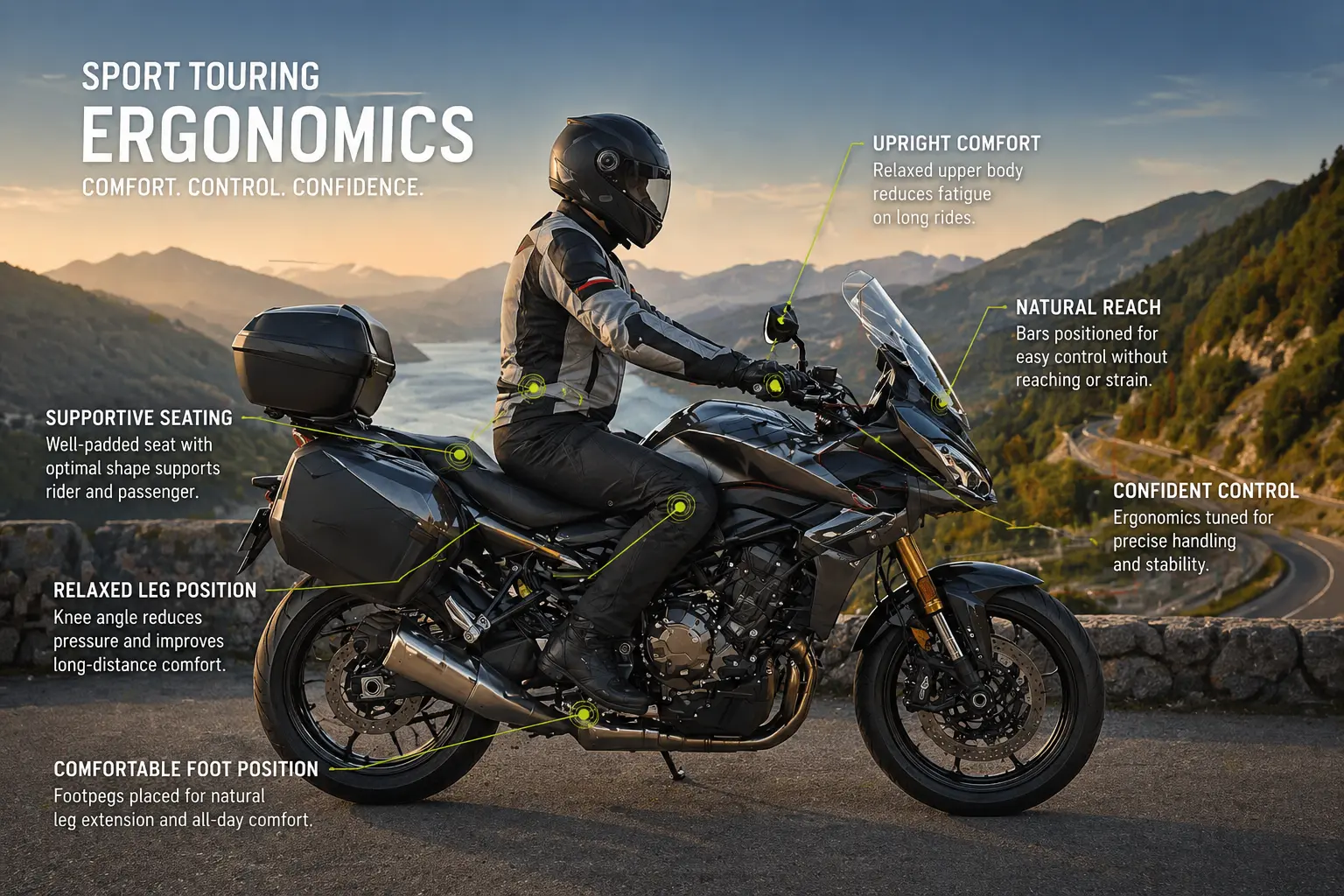
Motorcycle ergonomics dictate how your body physically interacts with the machine. On a pure sportbike, the riding position is designed for aerodynamic efficiency and control at high lean angles—often at the expense of comfort. Adventure bikes place you in an upright, commanding position suitable for standing on the pegs, but they can leave you more exposed to highway wind.
Sport touring ergonomics sit in the middle. The goal is to provide just enough forward lean to manage wind resistance and maintain front-end feel, while keeping the spine neutral enough to prevent lower back strain. If you find yourself reaching for ibuprofen after four hours, the bike may not be the problem—but your setup probably needs work.
The Rider Triangle: Seat, Handlebars and Footpegs
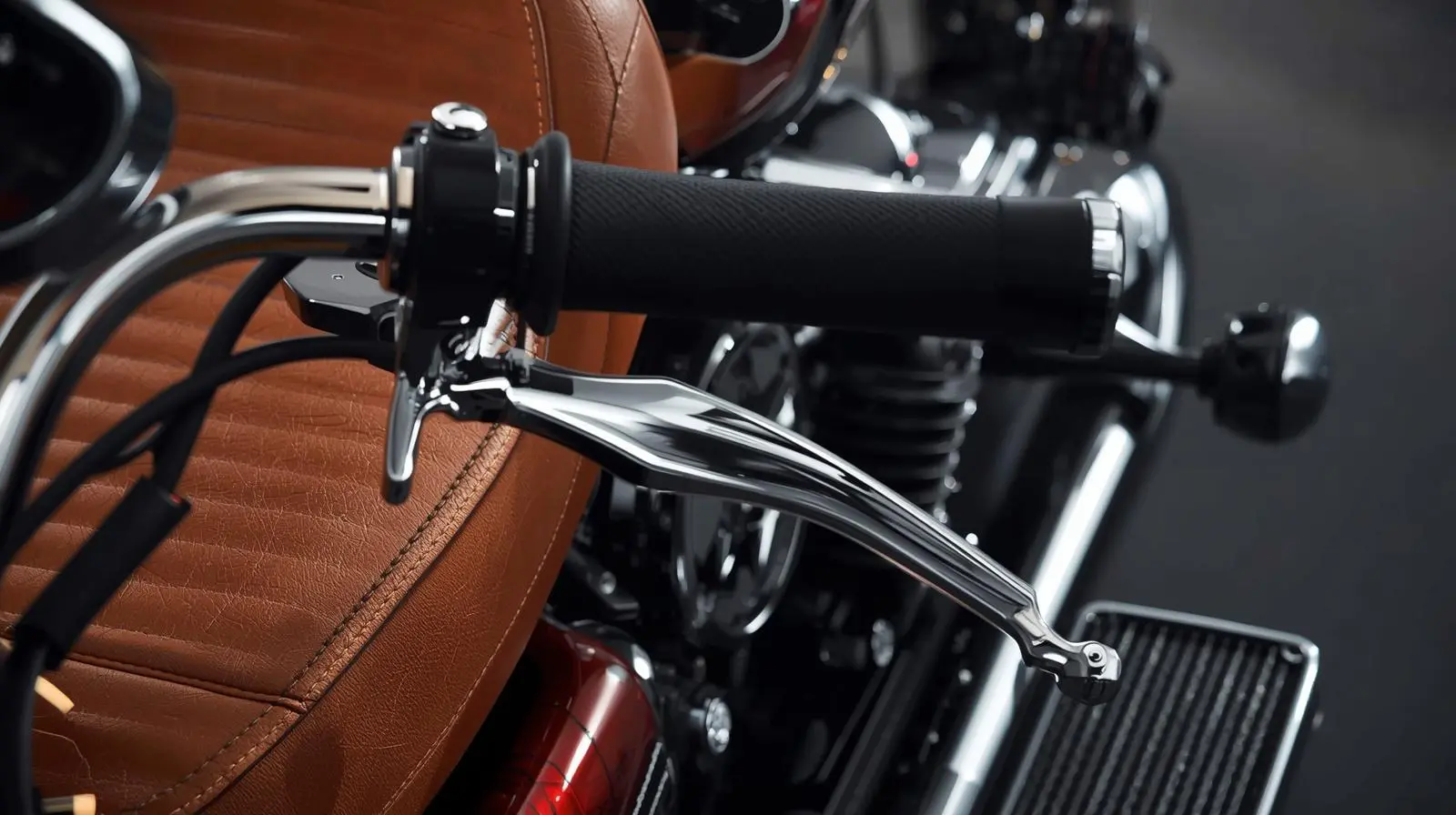
The foundation of motorcycle touring posture is the rider triangle: the relationship between the seat, handlebars, and footpegs.
On modern long-distance machines like the Yamaha Tracer 9 GT+ or the BMW R 1300 RT, this triangle is designed to distribute body weight more evenly than on a pure sportbike. If your handlebars are too low, excess weight moves onto your wrists and shoulders. If the footpegs are too high, your knees are forced into a tight angle, which can restrict blood flow and cause joint pain.
Adjusting this triangle—through bar risers, adjustable footpegs, or a different seat profile—is often the first step toward better endurance.
Motorcycle Seat Pain Relief: Why Softer Isn’t Always Better
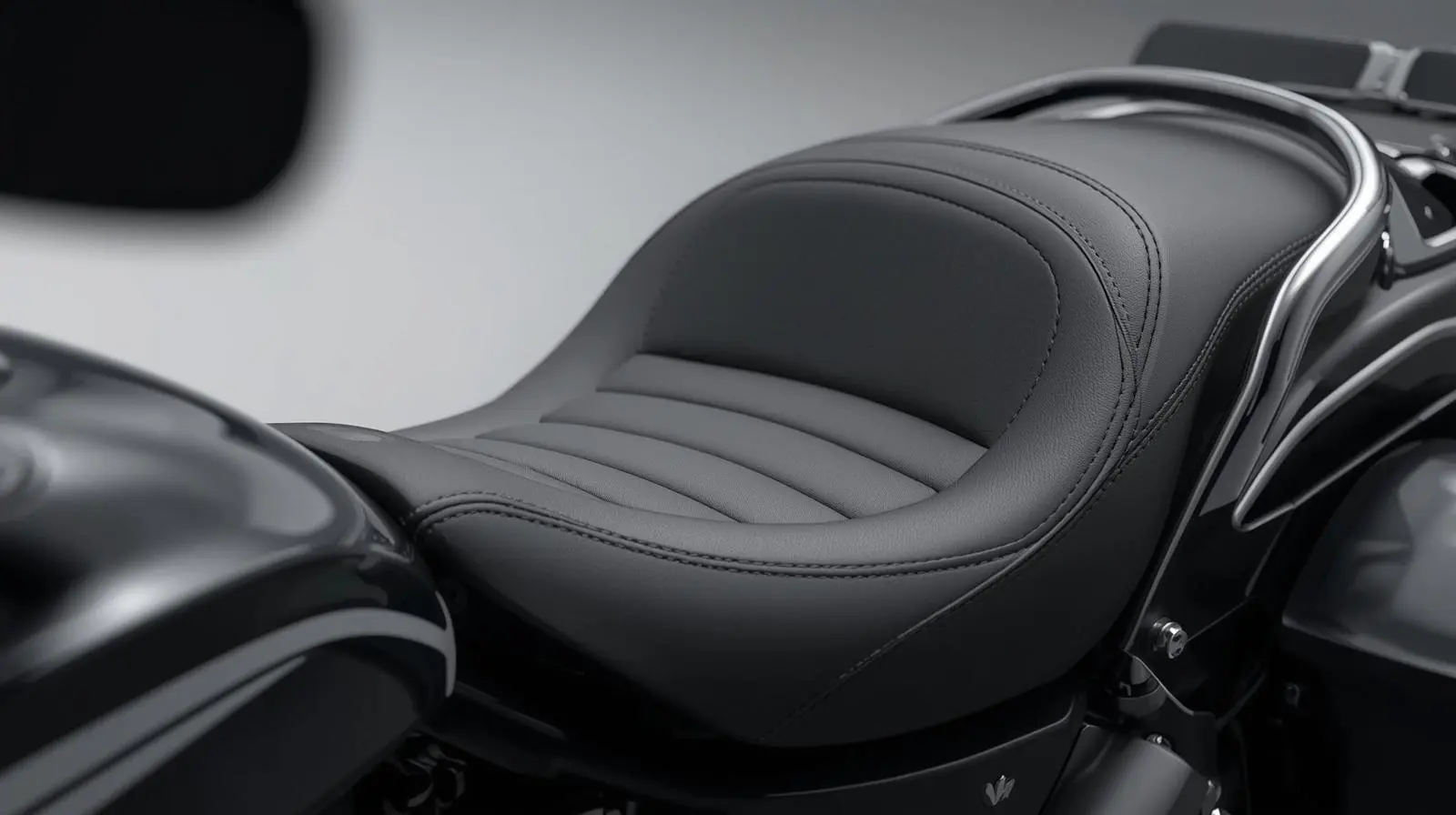
Seat pain is one of the most common complaints among distance riders. Factory seats are often designed to feel good in the showroom, not necessarily after a full day of riding. Soft foam can feel comfortable at first, but once it compresses, it may create painful pressure points around the sit bones.
For effective motorcycle seat pain relief, firmer and denser foam is often better than soft foam. A supportive seat distributes weight over a wider surface area and reduces pressure hotspots.
Movement also matters. Sliding forward slightly in technical sections, shifting back on motorway stretches, and standing briefly on the pegs at low speed can all help restore blood flow and reduce pressure in one fixed area.
How to Stop Wind Buffeting on a Sport Touring Bike
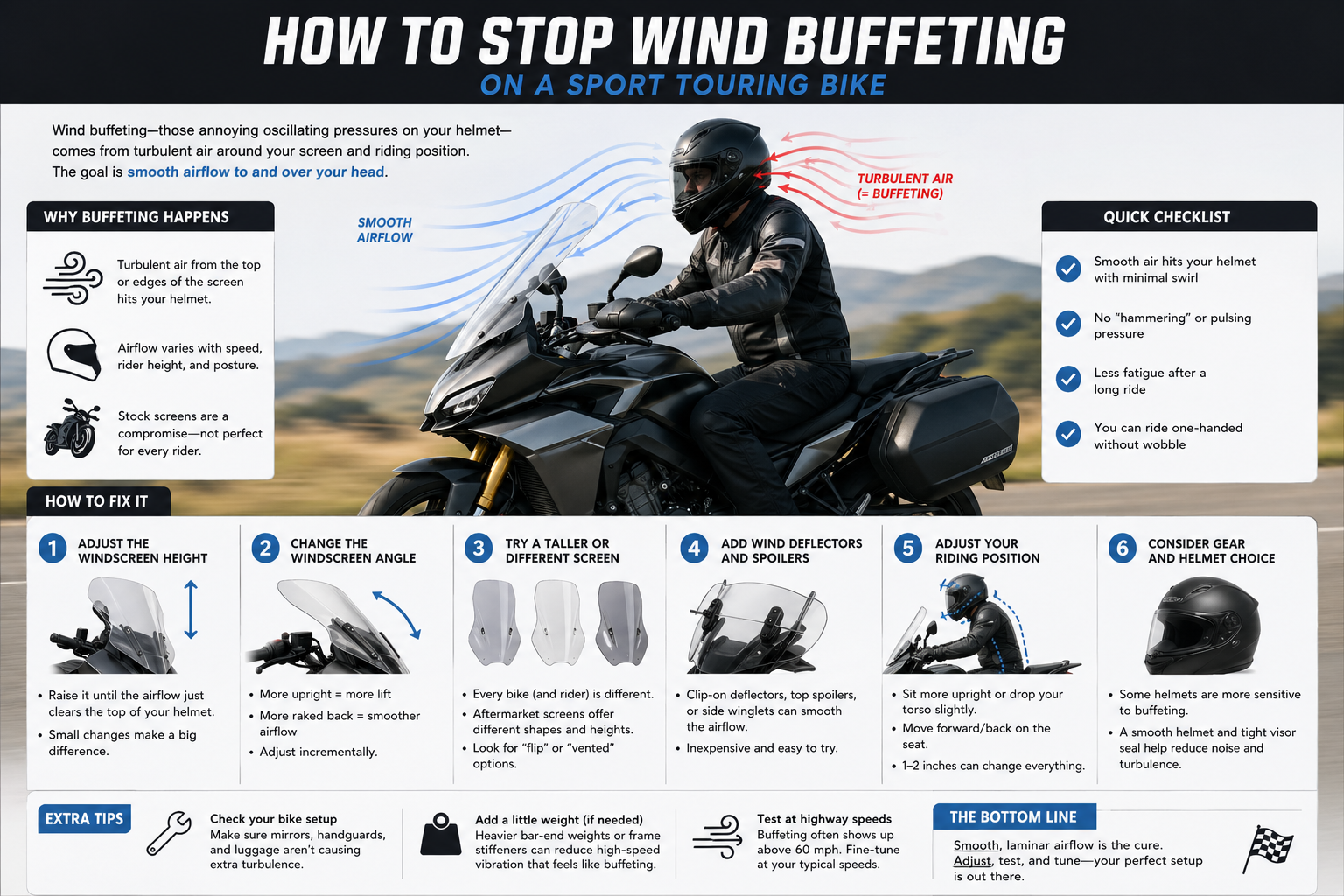
Wind protection is about creating smooth airflow, not simply blocking as much wind as possible. When turbulent air hits your helmet, it causes wind buffeting—rapid shaking that leads to neck fatigue, tension headaches, and reduced concentration.
Wind noise is also a major source of fatigue. Even if the bike feels physically comfortable, constant helmet roar can drain your mental focus over a long day.
To reduce wind buffeting:
Adjust Screen Height: Experiment with your windscreen to find clean, steady airflow – often called “laminar flow.” The air should either hit your upper chest smoothly or pass cleanly over your helmet. A screen that is too high can sometimes create a low-pressure pocket that pulls your head forward.
Check Mirrors and Handguards: Buffeting does not always come from the screen. Mirrors, handguards, and fairing edges can all disturb airflow around the helmet.
Wear Earplugs: Wear motorcycle earplugs or high-fidelity earplugs designed for wind-noise reduction. Reducing wind noise lowers mental fatigue and helps you stay more relaxed over long distances.
Motorcycle Touring Posture: How to Sit for Long Distance Comfort
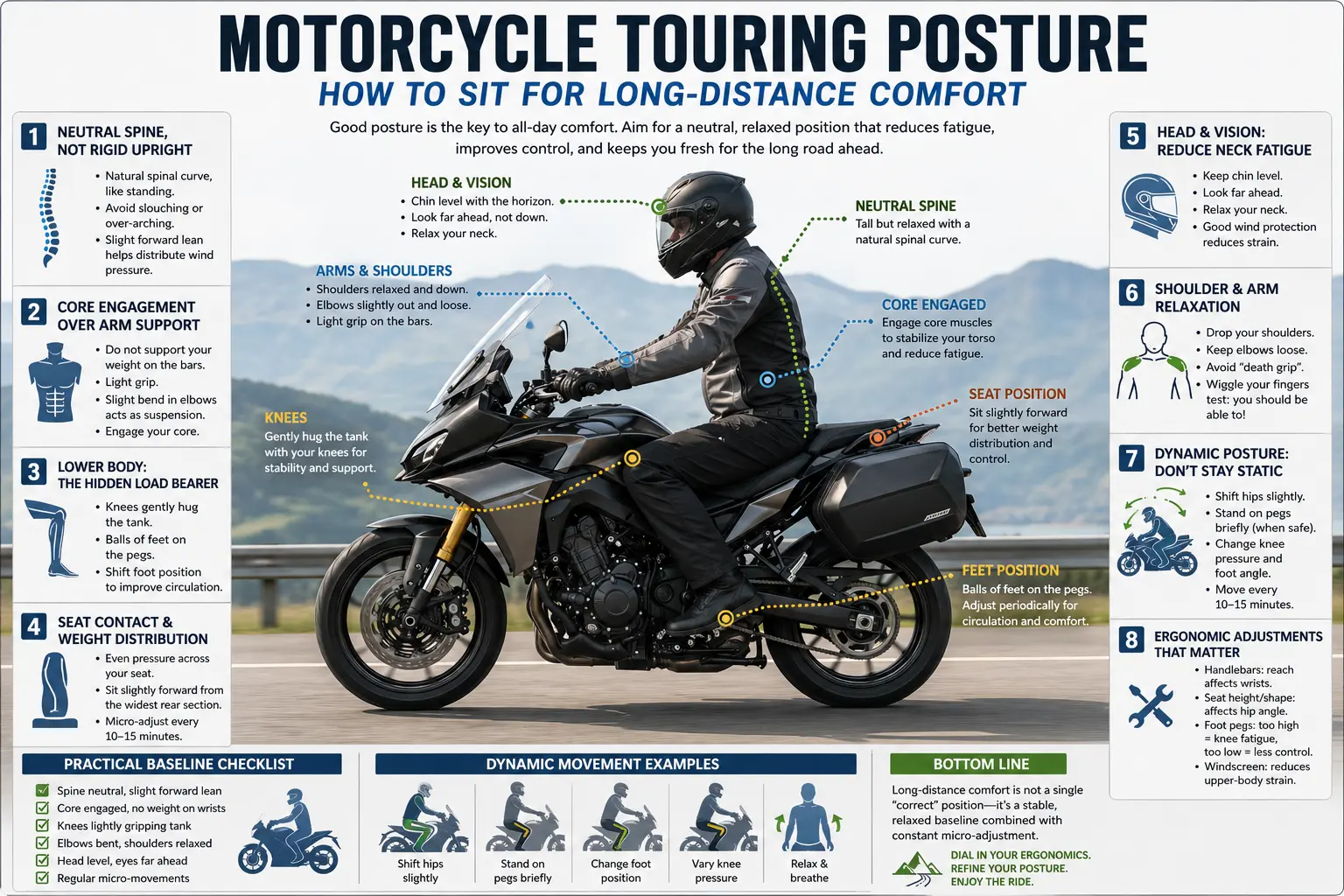
Even with good sport touring ergonomics, poor posture can ruin your ride.
The goal is a neutral spine. If you slump your lower back, your pelvis rolls backward and your upper body weight collapses onto your tailbone. Instead, pivot slightly forward at the hips and let your core support some of your weight.
Keep your elbows slightly bent. Straight, locked arms transmit every bump directly into your shoulders and neck. Your arms should act as natural shock absorbers. Grip the tank lightly with your knees, keep your hands relaxed, and avoid supporting your upper body through the handlebars.
Suspension Preload and Tire Pressure Setup
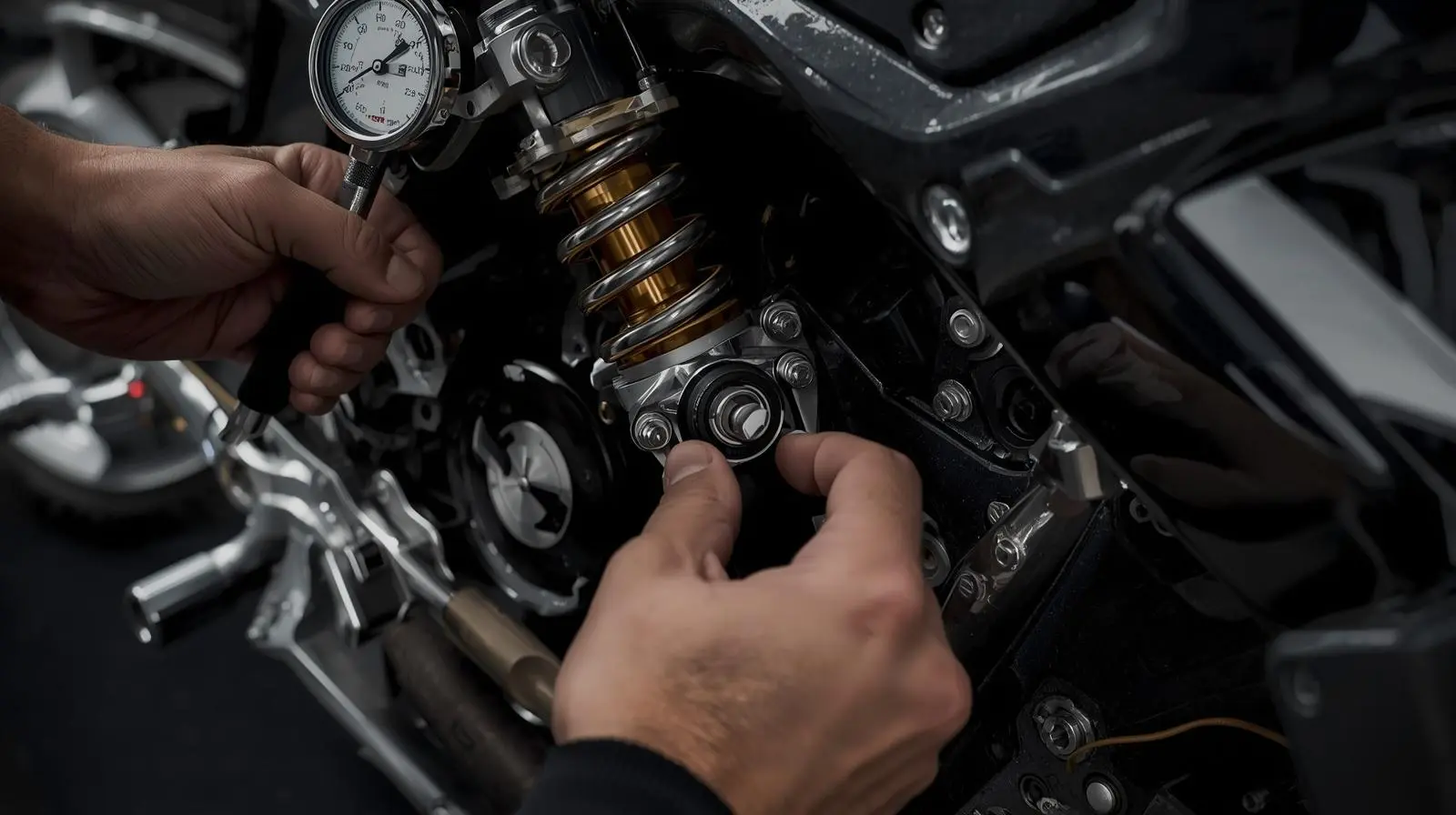
Most riders think of tire pressure as a safety check, but tire pressure setup also affects comfort, steering feel, and fatigue.
Under-inflated tires can make a motorcycle feel vague, slow to steer, and physically heavier than it really is. Over-inflated tires may transmit more harshness through the chassis and seat. On a loaded sport touring bike, incorrect rear pressure can also exaggerate “squat,” which changes steering geometry and makes the bike feel lazy in corners.
Suspension preload matters for the same reason. If you add a passenger or luggage without increasing rear preload, the rear of the bike sits too low. That changes weight distribution, slows steering, and can make the motorcycle feel unstable or heavy.
Always check tire pressure when the tires are cold, and use the correct value for your motorcycle, load, and riding condition. Use our Motorcycle Tire Pressure Guide to look up model-specific cold tire pressure values in BAR and PSI.
Before changing seats, screens, or bars, start with the basics: correct cold tire pressure and proper suspension preload for your exact payload.
Long-Distance Comfort Checklist
Verdict
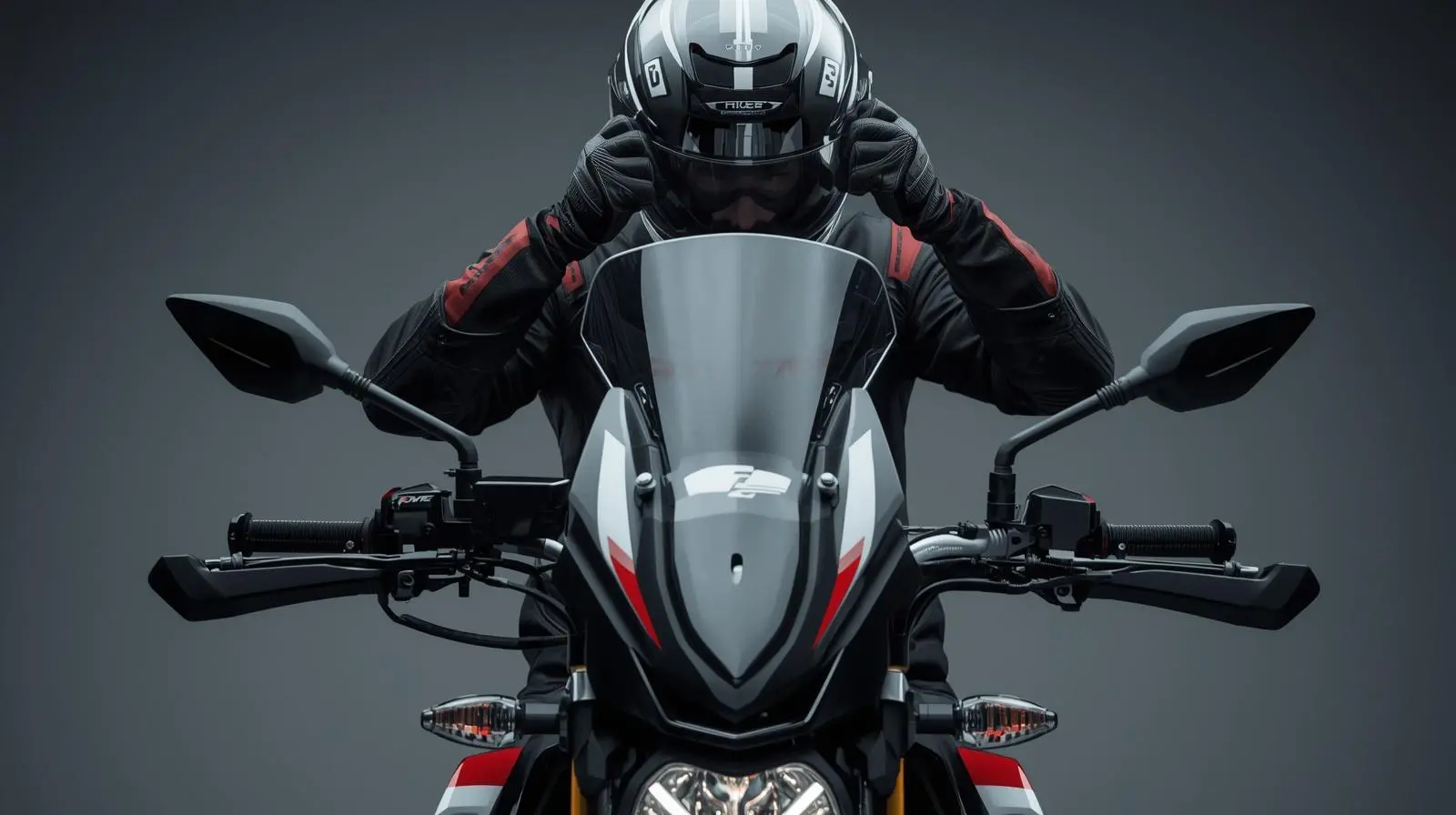
Long-distance motorcycle comfort is not an accident, and it should not be a test of pain tolerance. Small setup changes add up dramatically over a full day or multi-day trip.
By fine-tuning your rider triangle, dialing in your windscreen, setting preload correctly, and ensuring your tire pressure matches your load, you can transform a tiring motorcycle into a capable long-distance partner. Stop fighting the bike. Take the time to adapt the machine to fit your body, your load, and the kind of riding you actually do.