
The Ultimate Guide to Sport Touring with a Passenger
The romanticized vision of a multi-week two-up sport touring adventure across alpine passes often clashes with reality. Instead of effortless gliding, many couples experience clashing helmets, a rear suspension that aggressively bottoms out, and physical fatigue that ruins the adventure.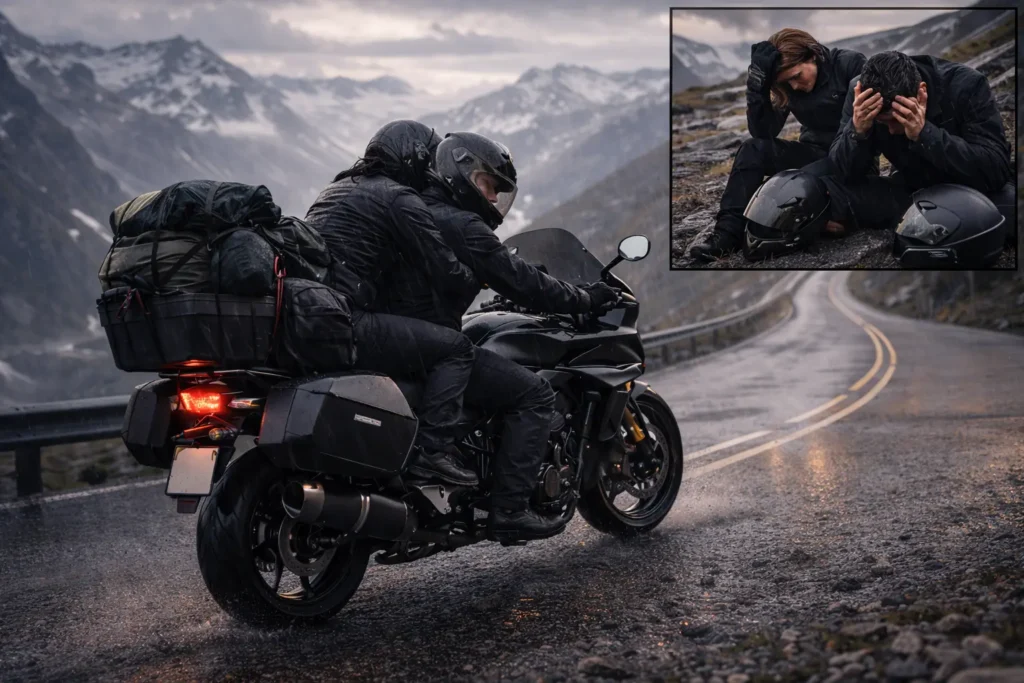
Sport touring is all about balancing high-performance riding with long-distance comfort. But the moment you add a passenger and a full set of luggage, the physics of your motorcycle undergo a radical transformation. You can increase the gross vehicle weight by up to 30%, shifting the center of gravity drastically upward and rearward.
If you want to cross continents with effortless grace—and keep your relationship intact—you need to recalibrate both your machine and your riding technique. Here is your ultimate guide to mastering two-up sport touring.
In this guide:
1. Prepping Your Machine: The Physics of the Payload
A massive mistake many riders make is assuming a bike engineered for solo speed can handle a passenger and heavy luggage without mechanical adjustments. Running factory-default solo settings with a heavy payload ruins your handling, destroys your tires, and creates severe safety risks.
Suspension Equilibrium
When you add a passenger, the rear of the bike compresses (known as “squat”). This alters your steering geometry, making the bike feel heavy, lethargic, and prone to running wide in corners. It also eats up your suspension travel, meaning the next pothole will send a violent shock directly into your passenger’s spine.
Rear Preload: Increase this significantly. Your goal is to adjust the “sag” so the suspension compresses no more than 30% of its total travel under the full weight of you, your passenger, and your gear.
Rear Rebound & Compression Damping: Increase these slightly to control the extra kinetic energy. This stops the bike from “pogoing” after hitting a bump.
Tire Pressure: Your Lifeline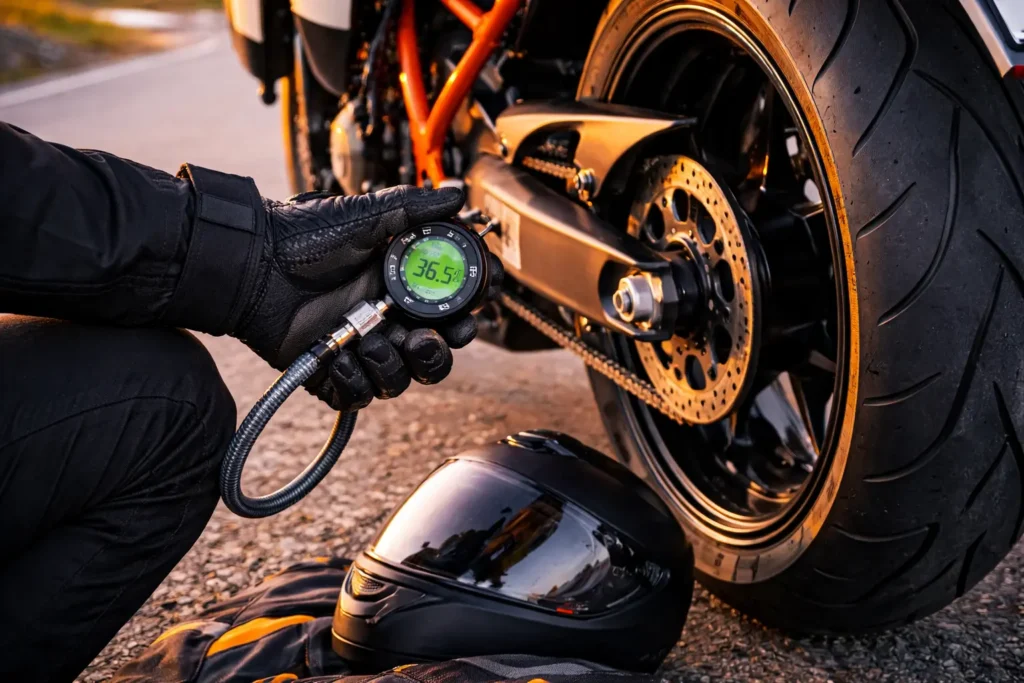
It’s the compressed air inside your tires, not the rubber, that carries the weight of your motorcycle, your passenger, and your gear. Under-inflated tires flex excessively under heavy loads, generating immense heat that destroys the rubber and causes sluggish, unpredictable handling. For two-up sport touring with full luggage, stability is paramount; you will often need to increase your rear tire pressure to 42 PSI (approx. 2.9 Bar) to provide the necessary support for the extra weight. Even a premium sport-touring tire cannot perform as intended if the pressure is incorrect for the specific load and riding style.
Always check your pressures when the tires are completely cold to ensure the most accurate reading for real-world riding conditions. Don’t rely on generic guesses or outdated forum posts when your safety is on the line.
Find Your Exact Specs: Before you head out on your next long-distance discovery, use our Motorcycle Tire Pressure Lookup Tool. It provides instant access to OEM-based accuracy for all major motorcycle brands, giving you the exact factory-recommended cold pressure for your specific model and setup
Headlight Realignment
With extra weight on the back, the front of your bike tilts upward. This blinds oncoming traffic and fails to illuminate the road directly in front of you. When fully loaded, take a moment to adjust your headlight aim slightly downward to compensate for the shifted pitch.
2.2. The Core Philosophy of Two-Up Sport Touring: Mastering the Mount
Mounting a heavily loaded sport-touring bike is a physical challenge. With hard panniers and a high center of gravity, the bike is incredibly vulnerable to tipping over at a standstill. Timing and choreography are everything.
The “Footpeg Fulcrum” Method: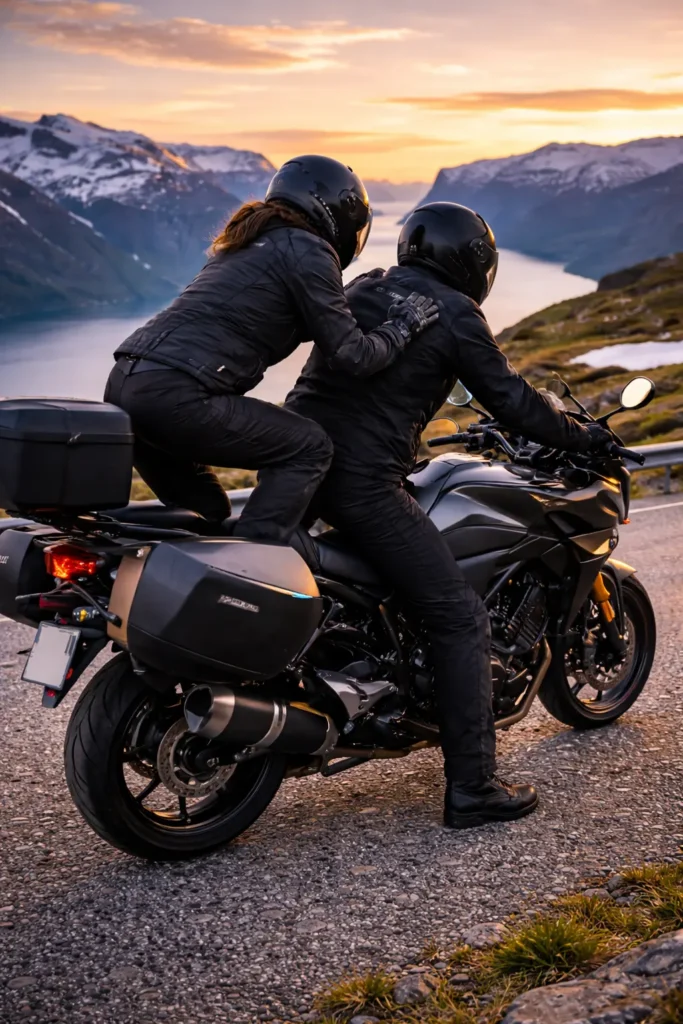
-
The rider mounts first, lifts the side stand, plants both feet firmly, and locks the front brake. (This stops the suspension from rolling).
-
The rider gives a verbal “all clear.”
-
The passenger approaches from the left side (avoiding the hot exhaust on the right).
-
The passenger places their left hand on the rider’s left shoulder, and their left foot on the left passenger peg.
-
Instead of swinging a leg from the ground, the passenger stands straight up vertically on the peg, transferring their weight directly down through the suspension.
-
They smoothly step their right leg over the seat and sit down.
This technique eliminates the terrifying lateral pull that usually destabilizes the bike!
3. Riding Dynamics: Eradicating the “Helmet Bonk”
A heavily loaded motorcycle takes longer to stop, needs more time to accelerate, and requires deliberate inputs. The core philosophy of two-up sport touring is absolute smoothness.
Mastering Deceleration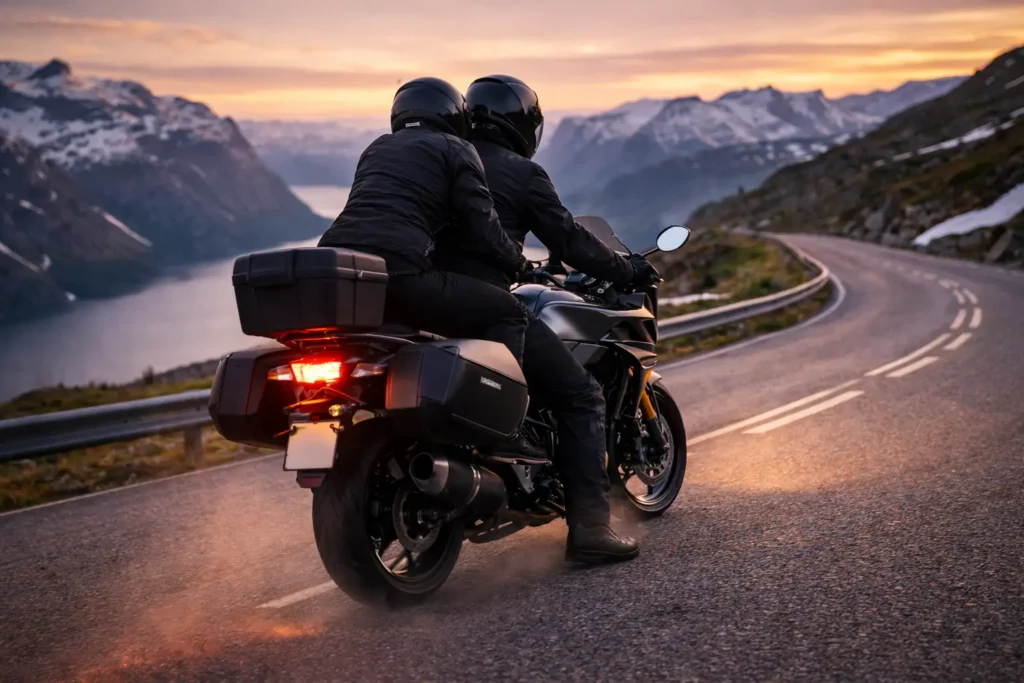
We all know the dreaded “helmet bonk”—when the passenger’s helmet repeatedly smashes into the back of the rider’s head during braking or shifting. Here is how you eradicate it forever:
-
The Rider’s Job: Shift your braking bias. Because there is massive weight over the rear tire, the rear brake becomes incredibly effective. Engage the rear brake just a split second before the front brake. This pulls the chassis taut, stops the front forks from diving aggressively, and results in a perfectly horizontal, smooth stop.
-
The Passenger’s Job: As the bike decelerates, the passenger should grip the rider with their inner thighs and brace one hand flat against the fuel tank. This allows the passenger to absorb their own forward kinetic energy, rather than collapsing onto the rider’s back.
The Art of Cornering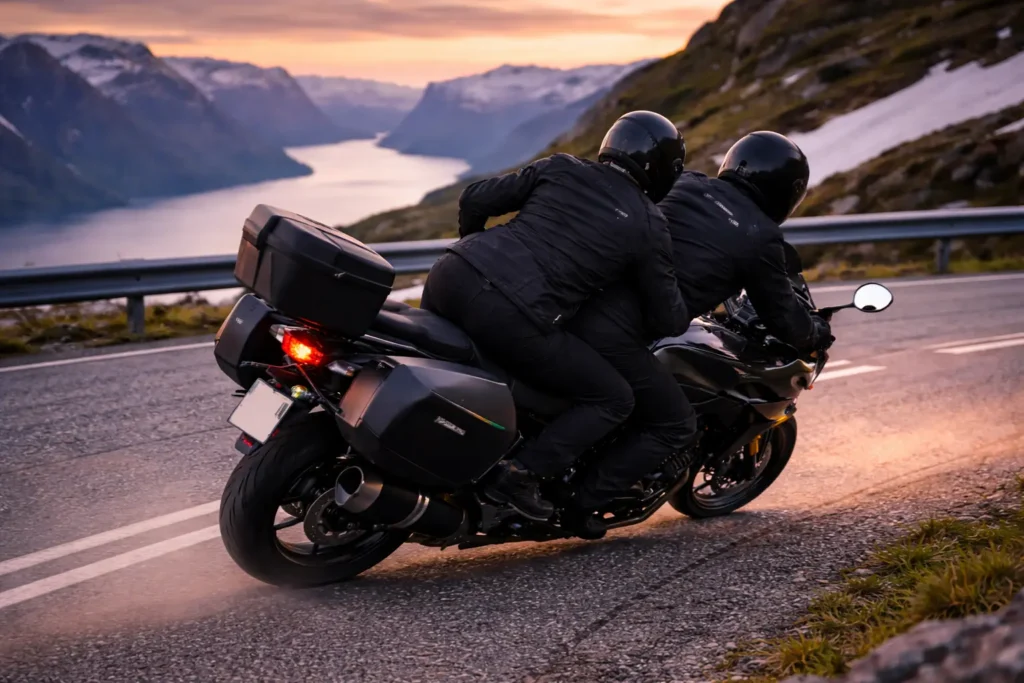
The greatest mistake a passenger can make is “counter-leaning”—trying to sit perfectly straight up while the bike leans into a corner. This fights the steering, destroys cornering clearance, and can cause a crash.
The perfect passenger is “dynamically neutral.” The secret? Simply look over the rider’s inside shoulder. If the road curves right, the passenger looks over the rider’s right shoulder. This tiny head movement naturally aligns the passenger’s body weight perfectly with the lean angle of the bike.
4. Communication & Comfort: The Human Interface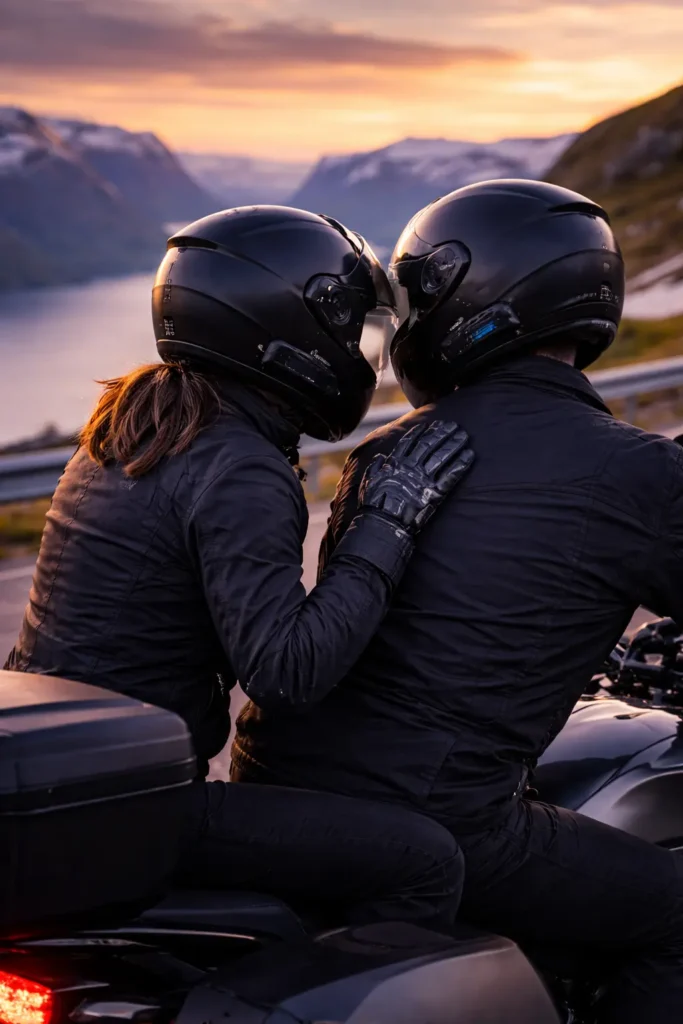
If your passenger is fatigued, anxious, or in pain, the journey immediately ceases to be an adventure.
-
Get Bluetooth Comms: The ambient roar of highway wind makes talking impossible. High-fidelity helmet intercoms (like Sena or Cardo) reduce isolation, allow for real-time navigation, and let the passenger request breaks without screaming.
-
Symmetrical Gear: The passenger faces the exact same risks as the rider. Casual attire is unacceptable. Both riders need full-face helmets, high-decibel earplugs, armored jackets/pants, and reinforced boots.
-
Upgrade the Seat: Stock sport-touring seats are often too thin. Upgrading to an aftermarket touring saddle with dense foam and a wider base will save your passenger’s lower back and dramatically extend your daily mileage.
5. Packing & Pacing: Strategic Endurance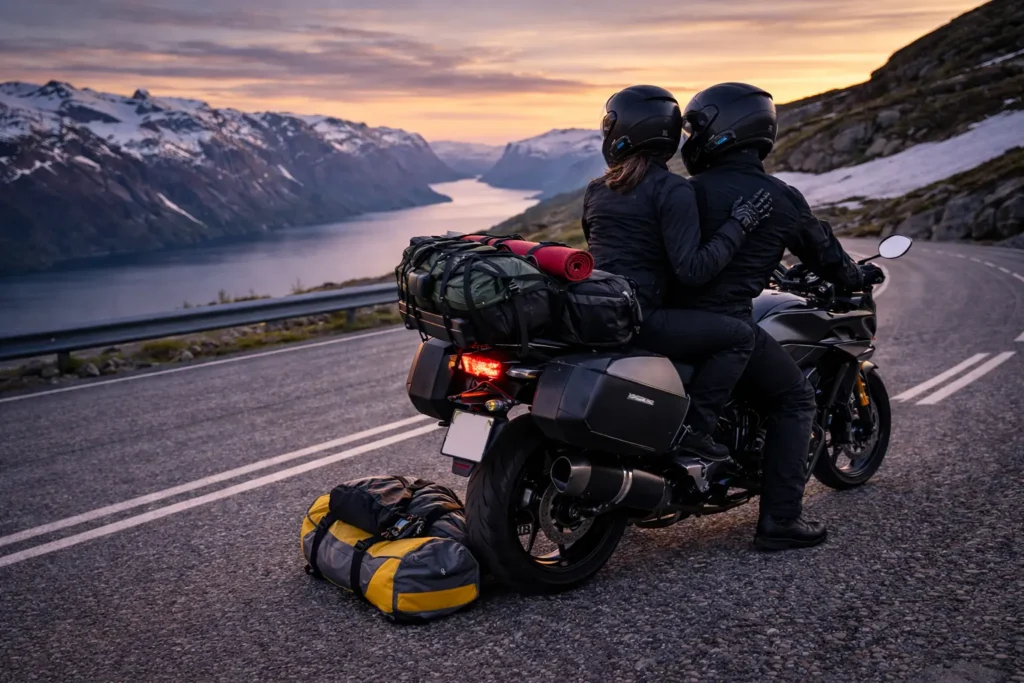
-
Load Distribution: Pack heavy, dense items (tools, water) as low and far forward in the side panniers as possible. The top box should only hold lightweight, bulky items like sleeping bags or rain gear. Overloading the top box creates a leverage effect that causes terrifying high-speed “death wobbles.”
-
The 90-Minute Rule: Do not try to ride 500 miles in one sitting. Enforce a mandatory stop every 60 to 90 minutes. Get off the bike, stretch your spine, hydrate, and look at the scenery. Two-up sport touring is about the journey, not just the destination.
Taking your adventure a step further and planning to sleep under the stars? Packing for a camping trip with a passenger requires even more strategic planning. For a complete breakdown of essential gear and advanced luggage setups, check out our ultimate Moto-Camping Guide.
The 10 Golden Rules of Two-Up Sport Touring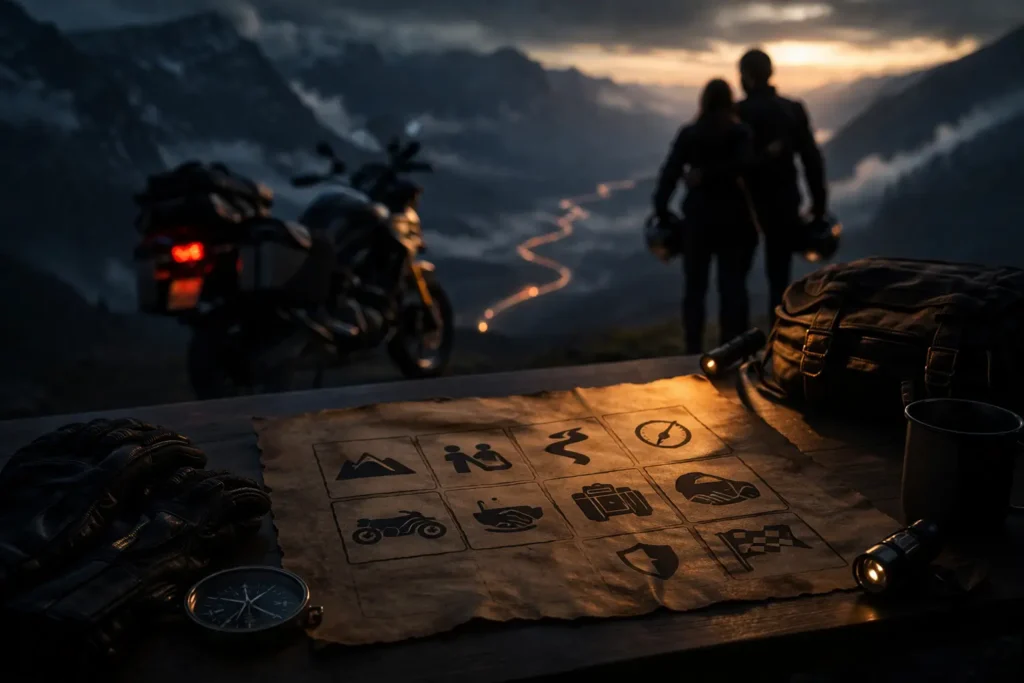
-
The Safety Briefing: Always agree on hand signals and mounting procedures before starting the engine.
-
Rear Brake Pre-Loading: Drag the rear brake first to prevent fork dive and helmet bonks.
-
The Inside Shoulder Gaze: The passenger always looks over the shoulder corresponding to the inside of the curve.
-
Core-Braced Braking: The passenger braces against the tank during deceleration.
-
Strict Luggage Rules: “Whoever opens a bag is solely responsible for locking it shut.”
-
Segmented Endurance: Stop every 60–90 minutes, no matter what.
-
Hydration Mapping: Drink water at every stop to fight wind-induced fatigue.
-
Low & Forward Packing: Keep the heavy gear in the side panniers, not the top box.
-
The Footpeg Fulcrum: Stand straight up on the peg to mount smoothly.
-
Active Co-Piloting: Give the passenger tasks (controlling music, navigating) so they feel like an active team member, not passive cargo.
The Bottom Line
When the mechanical setup of your machine and the synchronized movements of you and your partner are perfectly harmonized, the weight of the passenger vanishes. What remains is a seamless, unspoken dialogue of shifting mass and the shared thrill of leaning into the horizon together.