
Motorcycle Tire Pressure: The Science of Grip and Handling
Two small contact patches determine how every motorcycle accelerates, brakes, corners and communicates with the road.
Motorcycle tire pressure is one of the most important factors affecting grip, stability, braking and tire life. In the world of sport-touring, we obsess over horsepower, lean angles and electronic suspension settings — but all that technology is filtered through two small patches of rubber, each no larger than a credit card.
Understanding motorcycle tire pressure is not just about avoiding a flat. It is about mastering the physics of how your bike interacts with the asphalt. At Miles & Lean, we believe that zero compromise starts with understanding the why behind the PSI.
1. The Physics of the Contact Patch
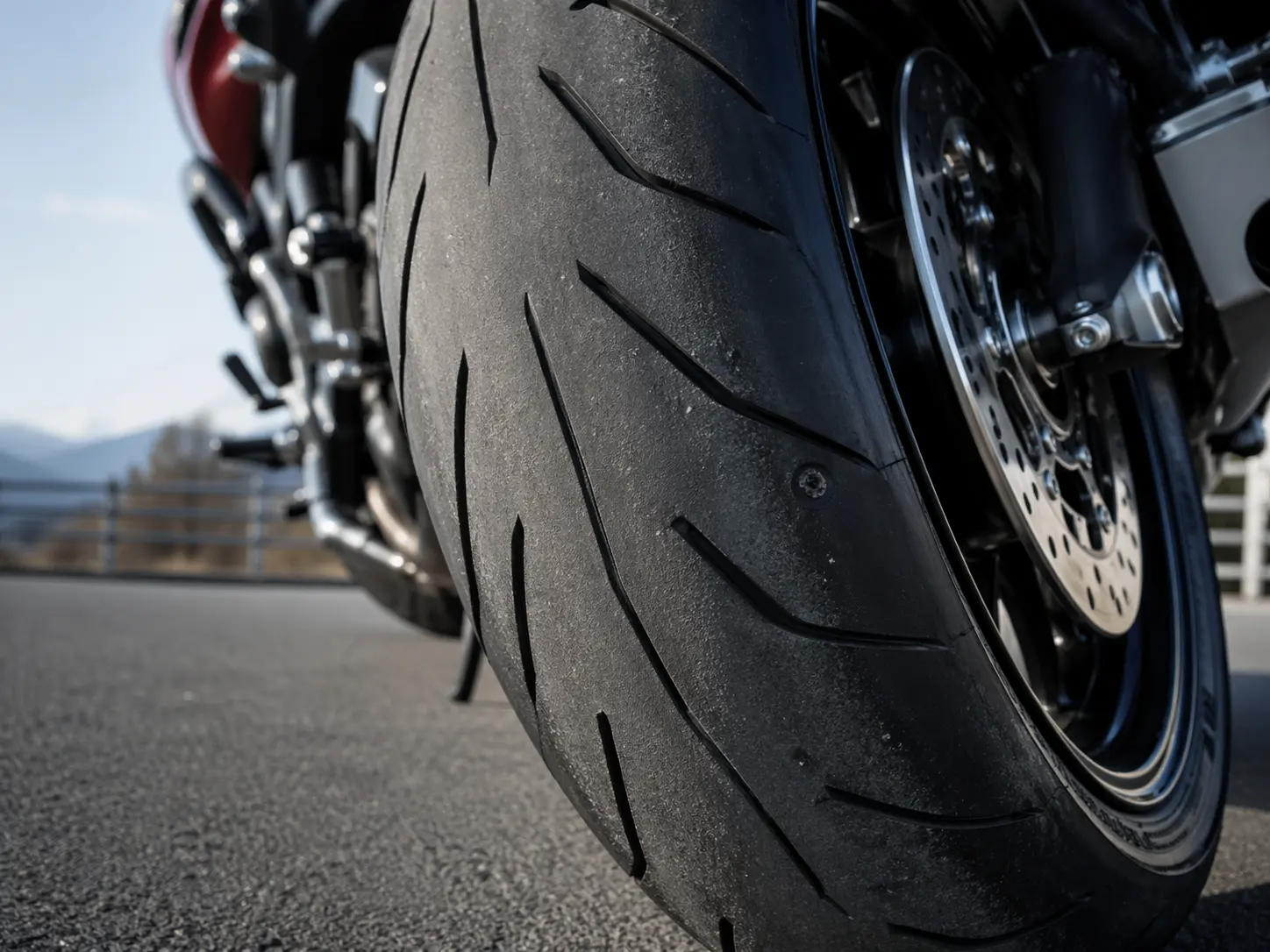
The contact patch is the area of the tire actually touching the road. Its size and shape are directly dictated by motorcycle tire pressure. Too much or too little pressure changes how the tire carcass flexes, how the bike steers, and how much usable grip reaches the asphalt.
A tire with too much air becomes crowned. The contact patch shrinks, grip is reduced, and the motorcycle can feel nervous, skittish or harsh over bumps.
The tire flattens out. While that can sound like more grip, on a heavy sport-tourer it causes excessive carcass deformation, heavy steering and wandering in corners.
For a sport-touring rider, the goal is a stable, consistent contact patch that can handle both the torque of a liter-bike and the weight of a full luggage set.
2. The Temperature Dance: Cold vs. Hot Pressure
One of the most misunderstood concepts in motorcycle maintenance is the rise in pressure as you ride. Air is a gas that expands when heated. As you carve through mountain passes, friction between the tire and the road — and internal friction inside the rubber itself — generates heat.
This is the baseline. OEM motorcycle tire pressure specifications are calculated when the tires are cold: at ambient temperature, before riding.
Ideally, pressure should increase by about 10–12% from cold to hot. If it rises much more, the starting pressure was likely too low and the tire is flexing too much.
Miles & Lean insight: Always set your pressures before you leave the garage. Checking pressure at a petrol station after 20 miles of motorway riding will give you a false hot reading. For general tire safety guidance, see Michelin motorcycle tire advice.
3. How Motorcycle Tire Pressure Influences Handling
How your bike tips into a corner is a direct result of tire profile stability. Incorrect motorcycle tire pressure changes the shape of the tire, the feel of the front end, and the way the motorcycle holds a line.
The Heavy Front End
If your bike feels like it wants to stand up in corners or requires significant muscle to keep leaned over, check your front tire pressure. A drop of just 3–4 PSI can ruin the agile geometry of a motorcycle like the Triumph Tiger Sport 660 tire pressure.
Stability at Speed
On the Autobahn or open highways, correct rear pressure is vital. Under-inflated tires at high speeds generate immense heat, which can increase the risk of tire damage or structural failure. Higher rear pressure helps keep the tire structure stable against centrifugal forces and load.
Important: Do not guess. Use the motorcycle manufacturer’s tire pressure recommendation as your baseline, then adjust only within sensible limits for load, luggage and riding conditions.
4. Motorcycle Tire Pressure: PSI vs. BAR Conversion
Depending on where you are touring, you will encounter different pressure units. Use this quick reference for common sport-touring motorcycle tire pressure ranges.
| BAR | PSI | Typical Application |
|---|---|---|
| 2.25 bar | 32.6 psi | Front — light sportbike / solo riding |
| 2.50 bar | 36.3 psi | Front — standard sport-tourer |
| 2.80 bar | 40.6 psi | Rear — solo sport-touring |
| 2.90 bar | 42.1 psi | Rear — two-up / full luggage |
For background on pressure units and measurement systems, see this general reference on tire pressure gauges.
5. Pros & Cons of Pressure Tuning
Correct motorcycle tire pressure prevents cupping and uneven wear, improves fuel economy, stabilizes braking performance, and helps premium tires such as the Michelin Road 6 or Pirelli Angel GT II work as intended.
Incorrect pressure creates vague feedback, heat damage, unstable handling and premature wear. You may lose the feel for what the front tire is doing before the problem becomes visible.
Conclusion: The Most Important Tool in Your Kit
You do not need a degree in fluid dynamics to ride well, but you do need to respect the air inside your tires. Motorcycle tire pressure simply comes down to this: air is the structural support of your tire. Without the right amount, the rubber cannot do its job.
Before your next trip, do not just kick the tires. Use a high-quality digital gauge and verify your numbers against the manufacturer’s data.
Need the exact numbers for your bike? Explore our comprehensive Motorcycle Tire Pressure Database, where we have compiled OEM data for major sport-touring models. For brand-specific guidelines, check out our BMW Tire Pressure Guide or our Best Sport-Touring Tires 2026 review.
FAQ
What is the correct motorcycle tire pressure?
The correct pressure depends on your motorcycle, tire size, load and riding conditions. Always start with the manufacturer’s cold tire pressure recommendation.
Should motorcycle tire pressure be checked cold or hot?
Motorcycle tire pressure should be checked cold. OEM values are based on ambient temperature before riding.
Does motorcycle tire pressure affect grip?
Yes. Tire pressure affects contact patch shape, carcass flex, heat generation and steering feel — all of which influence grip.
Is lower motorcycle tire pressure always better for grip?
No. Lower pressure may increase carcass flex, but on heavy sport-touring motorcycles it can cause overheating, vague handling and premature wear.